Emergency Preparedness For People Living In Flats
This guide contains affiliate links. If you buy through them, Prepper Weekly may earn a small commission at no extra cost to you. Prices and availability change, so check the latest details before you buy.
Most prepping advice assumes you have a garage, a garden and plenty of cupboard space. If you live in a flat, you have different challenges – less storage, shared stairwells, lifts that stop working in a power cut, and sometimes no gas supply at all. The good news is that a compact, well-chosen kit is all most flat-dwellers need.
What’s different about flats?
- Space: you need a kit that fits in a cupboard or under a bed.
- Lifts: in a power cut, lifts stop. Getting shopping, water or a person with limited mobility up and down the stairs becomes much harder.
- All-electric homes: many flats have electric cooking and heating, so a power cut takes out both.
- Fire safety: you need to know your building’s fire strategy – some blocks tell residents to “stay put” unless the fire is in their flat, others to evacuate.
- Shared supplies: water tanks and pumps in taller buildings may need electricity, so you can lose water in a power cut too.
- Neighbours: you live close to lots of people – a good thing in an emergency, if you know them.
A compact emergency kit for a flat
Aim for three days of supplies that fit in one large storage box or a couple of under-bed boxes:
- Bottled water – at least 9 litres per person (around 3 litres a day), plus a collapsible water carrier to fill if you get warning of a problem
- Food that needs no cooking – tins with ring-pull lids, crackers, peanut butter, cereal bars, dried fruit
- A head torch for each person and a rechargeable LED lantern
- A charged power bank (20,000mAh) and cables
- A battery or wind-up radio
- A first aid kit and a week’s supply of any prescription medicines
- Hand sanitiser, wet wipes, bin bags and toilet roll
- Warm layers, blankets or sleeping bags
- Copies of important documents in a waterproof pouch
- A grab bag by the door in case you need to leave quickly
Space-saving ideas
- Use under-bed storage boxes for water and food.
- Choose collapsible water carriers that fold flat until you need them.
- Store tins and dry food in your normal kitchen cupboards and rotate them into everyday meals – a working stockpile takes no extra space.
- Hang a grab bag on the back of a door or keep it in the hall cupboard.
- Pick multi-use items – a wind-up radio with a torch, a lantern that doubles as a power bank.
For more ideas, see our guides to hiding stuff at home and 16 places to store your supplies.
Power cuts in a flat
- Call 105 to report or check on a power cut.
- Expect the lift, door entry system and possibly water pumps to stop working.
- Never use a camping stove, BBQ or portable gas heater indoors – in a small flat, carbon monoxide builds up very quickly. Fit a battery CO alarm if you have any gas appliances.
- A small portable power station can run lights, a router and charge devices – and unlike a generator, it’s safe to use indoors and on a balcony.
- If anyone in your household relies on medical equipment or can’t manage stairs, sign up to the Priority Services Register and tell your building manager.
Read our full guide to preparing for a power cut in the UK.
Fire safety in flats
- Find out your building’s fire strategy (“stay put” or “simultaneous evacuation”) from your landlord, managing agent or the notices in your building.
- Know at least two ways out, and keep corridors and stairwells clear.
- Test your smoke alarm monthly.
- If you need to leave, close doors behind you, don’t use the lift, and call 999 once you’re safe.
- If you would need help to evacuate, tell your building manager – residents in many high-rise buildings can ask for a personal evacuation plan.
Get to know your neighbours
In a block of flats, your neighbours are your best emergency resource. Swap phone numbers with the people on your floor, find out who might need help (older residents, people with young children or limited mobility), and agree how you’ll check on each other in a power cut or emergency.
Recommended compact kit
Collapsible water carrier
Best for: storing water without using space
Folds flat when empty. Fill it from the tap if you get warning of a supply interruption.
Check the latest price on Amazon
Under-bed storage boxes
Best for: keeping your kit out of the way
Clear, lidded boxes let you see what’s inside and keep supplies dust-free.
Check the latest price on Amazon
Jackery Explorer 240D
Best for: power for lights and devices in a small home
A lightweight 256Wh power station that’s safe to use indoors and easy to store.
Check the latest price on Amazon
Head torch
Best for: getting up and down dark stairwells
Keeps both hands free on the stairs – much safer than holding a phone torch.
Check the latest price on Amazon
Grab bag
Best for: leaving quickly
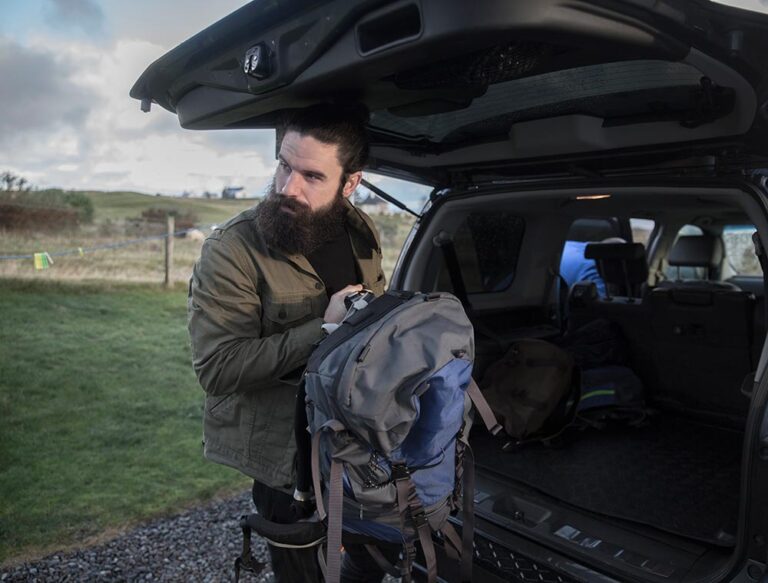
A 30-litre rucksack is big enough for essentials and small enough to keep in a cupboard. See what to pack in a UK grab bag.
Check the latest price on Amazon
Battery carbon monoxide alarm
Best for: flats with any gas or solid fuel appliance
Keeps working when the power is off.
Check the latest price on Amazon
Next steps
Write it all down in a household emergency plan (free printable template), and see our full UK household emergency kit list. For more on city living, read the difference between urban and rural prepping.