Best power banks for power cuts: UK buying guide
A power bank is the single most useful piece of emergency kit most households can buy. In a power cut it keeps your phone working – for calls, updates from your network operator and checking on family – and it can also run LED lanterns, radios and other USB devices.
A charged 20,000mAh power bank is a practical choice for most households preparing for a power cut. Smaller models suit everyday carry, while larger ones can help families keep several devices charged. The right choice depends on what you need to charge, how long the power might be off and whether you have another way to recharge.
Here’s what to look for, and our pick of what we consider are some of the best power banks for emergency use, including solar options.
Best power bank types at a glance
| Use | Suggested capacity | What to look for |
|---|---|---|
| Everyday carry | 10,000mAh | Compact USB-C model |
| Household emergency kit | 20,000mAh | USB-C input/output, two ports |
| Multiple devices | 25,000–30,000mAh | Higher output, clear display |
| Compatible laptop | 20,000mAh or more | Correct USB-C PD wattage |
Best compact option
An Anker 10,000mAh power bank or equivalent from an established manufacturer is a useful commuter option. Check size and weight, and make sure the USB-C port supports output as well as input.
Best all-round emergency option
A 20,000mAh UGREEN or Anker USB-C power bank is a sensible candidate for a household emergency kit. Two outputs can be useful, although charging two devices at once may reduce the power available to each.
Best for higher-power devices
A high-output USB-C Power Delivery power bank may charge a compatible tablet or laptop. Check the device’s required wattage, supported voltage profiles and cable rating. A high capacity alone does not establish laptop compatibility.
How many times will a power bank charge a phone?
The advertised capacity is usually measured at the internal battery voltage, not at USB output voltage. A 20,000mAh bank rated at 3.7V holds approximately 74Wh. Assuming 75% reaches the phone battery, that is roughly 55Wh. A phone with a 15Wh battery could therefore receive around three to four full charges. A 10,000mAh model might deliver around one to two. These are estimates, not guaranteed results; phone use during charging and conversion losses matter.
Are solar power banks worth buying?
A tiny solar panel built into a power bank is unlikely to refill a large battery quickly, particularly on a cloudy UK winter day. A separate portable solar panel with compatible USB output may be more practical when there is sufficient daylight. For short outages, a fully charged conventional bank is usually the simpler option.
What features matter most?
Choose a model with clear capacity and output ratings, useful indicators and a reputable UK supplier. Check for suitable cables, a usable charging speed and a warranty. Wireless charging can be convenient but generally introduces additional losses. A spare USB-C charging cable belongs in the same emergency kit as the bank.
How to store power banks safely
Follow the manufacturer’s storage and charging instructions, including temperature limits and recommended charge level. Check the bank periodically and recharge as needed. Do not use one that is swollen, damaged, unusually hot or subject to a recall. Charge on a suitable hard surface away from bedding and never obstruct an escape route. Avoid leaving lithium batteries in a hot or freezing car for prolonged periods.
Keep your phone useful during an outage
Enable battery saver, reduce screen brightness and download important contacts and maps in advance. Keep a paper copy of essential numbers. Broadband and mobile networks can also be disrupted, so include a battery-powered emergency radio in your preparations. Our winter power cut guide covers other useful supplies.
Frequently asked questions
Is 20,000mAh enough for a power cut?
Often it is enough for several phone charges, but not for indefinitely powering a household. Consider the number of devices and expected outage length.
Can a power bank run a Wi-Fi router?
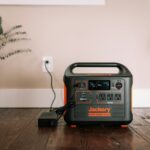
Only with compatible voltage, connectors and power requirements. Ordinary USB power banks are not universally suitable. A purpose-designed router backup or power station may be more appropriate.
Can I take a power bank on a plane?
Airline rules apply. Power banks generally belong in hand baggage, not checked luggage. Check the carrier’s current capacity limits and restrictions before travelling.
How many power banks should I have?
One per person who relies on a phone can be a useful starting point, with an additional charged unit for shared use if the budget allows.
This guide contains affiliate links. If you buy through them, Prepper Weekly may earn a commission at no extra cost to you. Prices and availability can change. Recommendations are based on suitability and specifications, not hands-on testing.
Recommended products

Leatherman Rev Multi-Tool
Pliers, knife, screwdrivers and more in one pocket-sized tool. A dependable everyday carry and home emergency kit essential.
View on Amazon
Blukar Rechargeable LED Camping Lantern
Bright, rechargeable lantern that lights a whole room during a blackout and doubles up for camping. Can also charge your phone.
View on Amazon
Ledlenser H8R Rechargeable Head Torch
Bright 600-lumen rechargeable head torch that keeps your hands free during power cuts, night walks and emergencies.
View on AmazonWe may earn a small commission if you buy through these links, at no extra cost to you. Learn more