Fire Preparedness
Being prepared for a fire in the home or the workplace could mean that you are at least halfway there to managing the risks and dangers – so here are some pointers on fire preparedness:
In the home
Many local authorities and fire brigades currently offer active advice and support on fire safety in the home:
Fire safety advice
- a good example is provided by Cheshire Fire & Rescue Service which offers an online safety check to complete from the comfort of your own home – and which will provide a fire safety plan specifically tailored to your particular circumstances along with expert advice on the prevention of fires in your home;
Smoke alarms
- one of the first lines of defence against a fire taking hold in your home is a smoke alarm;
- in England and Wales, the installation, positioning, and number of smoke alarms fitted in your home is determined by the Building Regulations – as summarised on the Fire Angel website;
- a minimum level of protection will be given by at least one alarm on each floor of the building, a heat alarm in the kitchen area, and the interconnection of alarms that are audible throughout the home;
- if you are the landlord of let property, minimum standards are required by law. In England, since October 2022 landlords must fit at least one smoke alarm on every storey, and a carbon monoxide (CO) alarm in any room with a fixed combustion appliance such as a boiler, fire or wood burner (gas cookers are exempt). In Scotland, all homes – not just rented ones – have needed interlinked smoke and heat alarms since February 2022, plus a CO alarm where there is a fuel-burning appliance. Rules differ in Wales and Northern Ireland, so check with your local council;
- smoke alarms and CO detectors should be tested monthly. Many modern alarms have sealed 10-year batteries – replace the whole unit when it reaches the end of its life; otherwise, change the batteries at least once a year;
Escape planning
- if you discover that a fire has taken hold in your home, there is a natural tendency to panic – helping you to stay calm and knowing just what to do will be helped if you have an escape plan;
- an escape plan is just that – your quickest and easiest way out of your house from whatever room you happen to be in at the time since you must be prepared to leave immediately, call 999, and not attempt to tackle any blaze yourself;
- you also need to have an escape plan B – in case your planned route out is blocked;
- each night, before you get into bed, get into the routine of making a final check for potential fire hazards – bearing in mind that once you are asleep it will take longer for you to be aware that a fire is burning and has already taken hold;
Fire extinguishers
- they are typically not a fire safety requirement under the Building Regulations for private residences, but fire extinguishers can prove useful for tackling relatively small fires in the home – controlling them before they get out of hand;
- as a detailed guide published by the Fire Safety Advice Centre – and updated on the 2nd of June 2021 – makes clear, however, one of the problems of using fire extinguishers in the home is the sheer range of different types from which to choose;
- these range from the conventional water extinguisher, for example, to dry powder, foam, carbon dioxide, or wet chemical extinguishers – all of which are designed for tackling different types of fire.
Tips on dealing with a fire at home
Should you have a fire in your home, follow this advice from UK fire and rescue services – get out, stay out, and call 999:
- call 999;
- don’t open doors that are warm to the touch. If closed doors or handles are warm or smoke blocks your primary escape route, use your Plan B escape route;
- if you have to escape through smoke, get down low and go under the smoke to your exit. Close the doors behind you;
- if heat, smoke or flames block your exit routes, stay in the room with doors closed;
- place a wet towel under the door;
- once you are outside, go to your meeting place and follow your family emergency communication plan.
If your clothes catch fire:
- drop to the ground and cover your face;
- roll over and over or back and forth until the flames go out. Running will only make the fire burn faster;
- once the flames are out, cool the burned skin under cool running water for 20 minutes. Then call for medical attention.
In the workplace
If you are responsible for health and safety in the workplace, fire preparedness is clearly high on your list of priorities. Indeed, the Regulatory Reform (Fire Safety) Order 2005 or “the Fire Safety Order”, which came into force in England and Wales with effect from the 1st of October 2006, sets out your statutory responsibilities, advises guidance from the London Fire Brigade (LFB).
The law requires that you conduct a fire risk assessment – identifying individuals most at risk, measures to mitigate the risks, the development of a plan for use in response to any fire emergency, and the regular review of the fire risk assessment.
You also have a statutory duty to provide adequate fire safety training – general awareness of the risks and appropriate fire safety responses – to all your employees.
Specific fire safety standards vary, of course, from building to building depending on their size and use – the standards in any kind of sheltered housing, for example, are likely to be considerably more stringent than those applied to an office full of able-bodied individuals.
Regional fire brigades in England and Wales have a responsibility for enforcing fire safety standards and preparedness in the workplace. As part of those enforcement duties, they may schedule visits to commercial premises or even conduct inspections unannounced.
In the event that inspections such as these reveal some failure or inadequacy in the building or organisation’s fire preparedness, the fire brigade may offer advice suggesting remedial measures and action. In more serious breaches, the brigade may look to bring criminal charges against those responsible. In the most serious cases, therefore, failure to implement adequate fire safety measures might result in fines or even imprisonment.
About The Author

Article by the Prepper Weekly editor. Prepper Weekly covers practical, UK-focused preparedness – from emergency planning, power cuts and flooding to food, water, kit and outdoor skills – without the fear-mongering. Find out more about Prepper Weekly.
Recommended products

Fireproof Document Bag
Keep passports, insurance papers, cash and USB backups together and protected from fire and water – grab it and go.
View on Amazon
British Standard First Aid Kit
A well-stocked, BS-compliant kit for home, car or workplace. Everything you need to deal with cuts, burns and sprains.
View on Amazon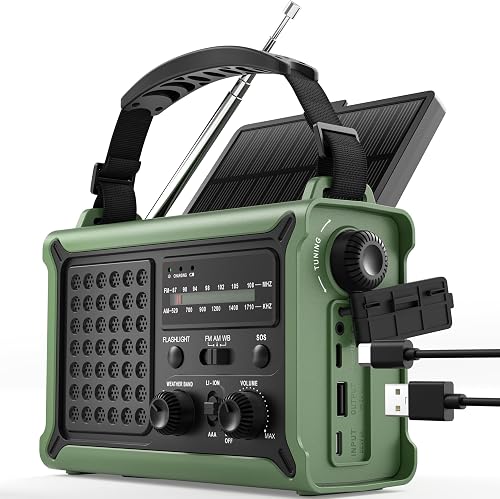
ROCAM Wind-Up Solar Emergency Radio
Hand-crank and solar powered radio with torch and phone charging, so you can hear official updates when the power and internet are down.
View on AmazonWe may earn a small commission if you buy through these links, at no extra cost to you. Learn more